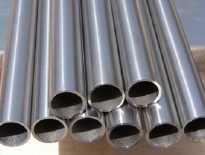
Titanium is an excellent material for a variety of applications, including fasteners, and it has a number of advantages, including corrosion resistance, strength, and weight. Because of its strength-to-weight ratio, titanium is highly valued in terms of physical attributes.
The metal is both strong and ductile. It has a high melting point, making it appropriate for a wide range of high-temperature applications. It is not magnetic, and it does not conduct electricity or heat effectively, and it can gall when machined if not properly cooled.
Benefits of titanium fasteners:
High Specific Strength: Titanium has a density that is higher than aluminium but lower than copper, steel, and nickel, but it has a significantly higher strength than other metals. Titanium fasteners are both strong and light.
Good Heat Resistance and Low-Temperature Resistance: Titanium Grade 2 Fasteners may function correctly at temperatures as low as minus 250°C and as high as 600°C. They have the ability to keep their shape without altering it.
Corrosion resistance: Titanium alloys resist corrosion in a range of outlets, and titanium fasteners can survive rough temperatures.
Titanium is a non-magnetic metal: It won’t be magnetized in a strong magnetic field, which implies it won’t be magnetized at all. It is also risk-free. At the same time, titanium is non-toxic and biocompatible.
Strong Damping Resistance: When exposed to electrical and mechanical vibrations, titanium has the longest damping time. It’s used in medicinal ultrasonic pulverizers, pitching forks, and professional audio loudspeaker vibration films as a vibration element.
Where can Titanium properties be put to use?
Titanium is extremely distinctive due to its strength and low weight, and some grades of Titanium can be two to four times stronger than some grades of Stainless Steel. Titanium is useful for aerospace, medicinal, and military applications because of these characteristics.
Titanium Fasteners are also resistant to a variety of solutions, and they are frequently found in salty conditions, making them ideal for industries such as salination, oil, and navy. Chlorite, hypochlorite, chlorate, perchlorate, and chlorine dioxide are just a few of the chlorine or chloride solutions they may withstand. If chlorine is applied in the absence of water or as a gas, fast corrosion can occur.
However, the material has drawbacks: while it has great chlorine resistance, it cannot survive in strong acids such as hydrochloric or sulfuric acid, as these acids damage the protective passive layer that Titanium produces when exposed to oxygen and can cause quick corrosion. Titanium fasteners made of Grade 5 are non-ferromagnetic, which means they are neither magnetic nor attracted to magnets at any temperature.