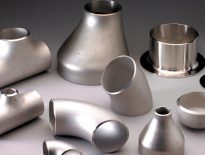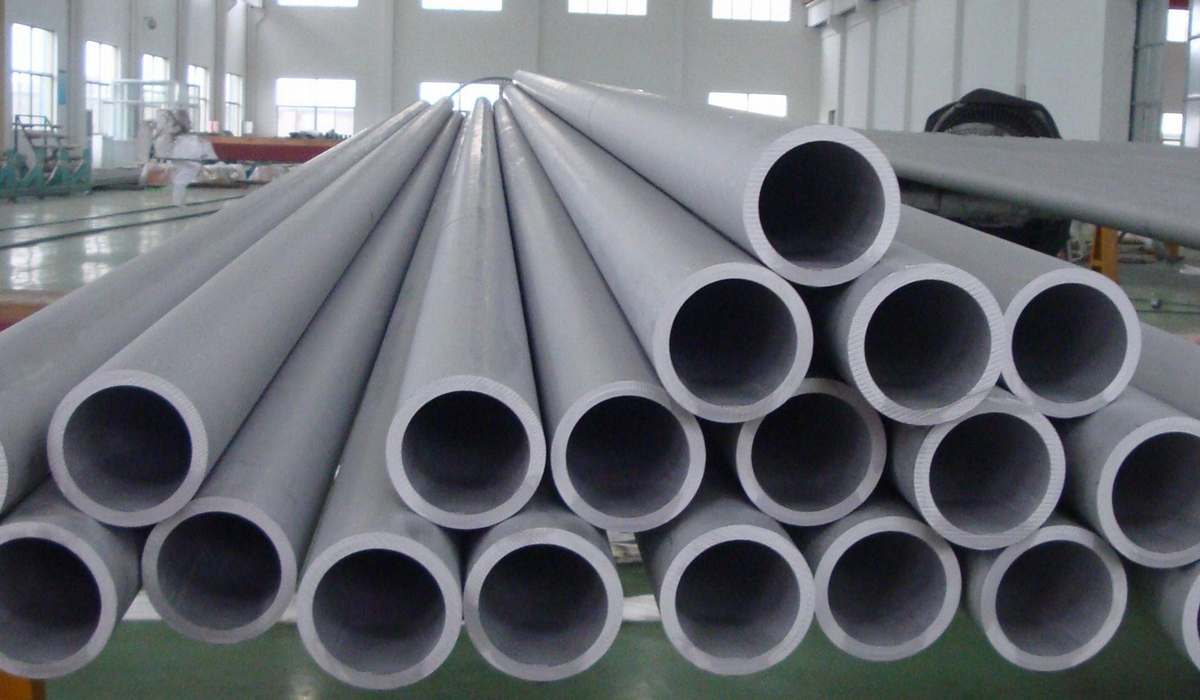
Stainless Steel Pipes
In most fluid or gas transport piping systems, stainless steel pipe is used. Stainless steel pipe is manufactured from a steel alloy containing nickel and chromium, which provides corrosion resistance.
Various types of stainless steel pipes and their uses
1. 304 Stainless Steel Pipes:
The 304 grade, often known as 18-8, is an austenitic stainless steel pipe that normally has at least 18 percent chromium and a minimum of 8% nickel. Stainless steel 304 pipes offer the broadest operating temperature range when compared to copper, aluminum, and other alloys. Temperature control is essential in many industries, including food production. 304 Stainless Steel Pipes have a wide range of uses, including stainless steel. Examples of pipe applications include corrosion-resistant electrical enclosures, automobile molding and trim, wheel covers, kitchen equipment, hose clamps, exhaust manifolds, stainless hardware, storage tanks, pressure vessels, and pipes.
2. 304L Stainless Steel Pipes:
When compared to “normal” grade 304 stainless steel Pipes, Stainless Steel Pipes 304L has a modest but perceptible drop in important mechanical performance attributes. Food processing equipment, particularly in beer brewing, milk processing, and winemaking, are among the many uses for Alloy 304L Stainless Steel Pipes at home and in the workplace. Benches, sinks, troughs, equipment, and gadgets for the kitchen.
3. 304h stainless steel pipes:
304H Stainless Steel Pipes are austenitic stainless steel with a maximum of 0.08 percent carbon and 18-19 percent chromium and 8-11 percent nickel. 304H Stainless Steel Pipes are been commonly used in this application such as Petroleum refineries, Boilers, Pipelines, Heat exchangers, Condensers, Steam exhausts, Cooling towers, Electric generation plants, Occasionally used in fertilizer and chemical plants.
4. 310 Stainless steel Pipes:
The electric resistivity of these 310 stainless steel pipes is good up to 720 n.m. Waste incineration operations, industrial furnaces, thermal treatment plants, and petrochemical industries all employ 310 stainless steel pipes.